You learn the most from what you lose
Their grief is not punishment. It is love turned inward and put to work.
Listen while reading · Holocene — Bon Iver
You learn the most from what you lose.
It is a cruel arrangement, and it is the only one most of us are given. In the beginning there is all of the goodness—the butterflies, the quiet disbelief that a thing has actually arrived. Then the newness wears smooth and we begin to coast. We mistake the calm for permanence. We stop growing, because growth is what you do when you are still hungry, and we are no longer hungry. We learn the shape of our peace so well that we stop seeing it at all.
Then, one day, it is gone. Health. A job. A person. Whatever it was, the ordinary comes down all at once and walks out of our lives, and we are left standing inside a life we were certain of, holding nothing. We are lost—not in the sense of not knowing where we are, but in the sense of not knowing who we are without it.
What follows is the long season of questioning. Where did it go wrong? Which day was the day? Some reach for vices that dull it; most simply stay busy enough to outrun it. But those who truly loved what they lost do the harder thing: they go quiet, and they stay there. They withdraw not out of shame but out of conviction, because they know there is something in the wreckage worth learning and they intend to find it. Their grief is not punishment. It is love turned inward and put to work. They will not be undone by this twice. And if there were mistakes, if there were people they hurt along the way, they make a vow—silently, to no one—never again.
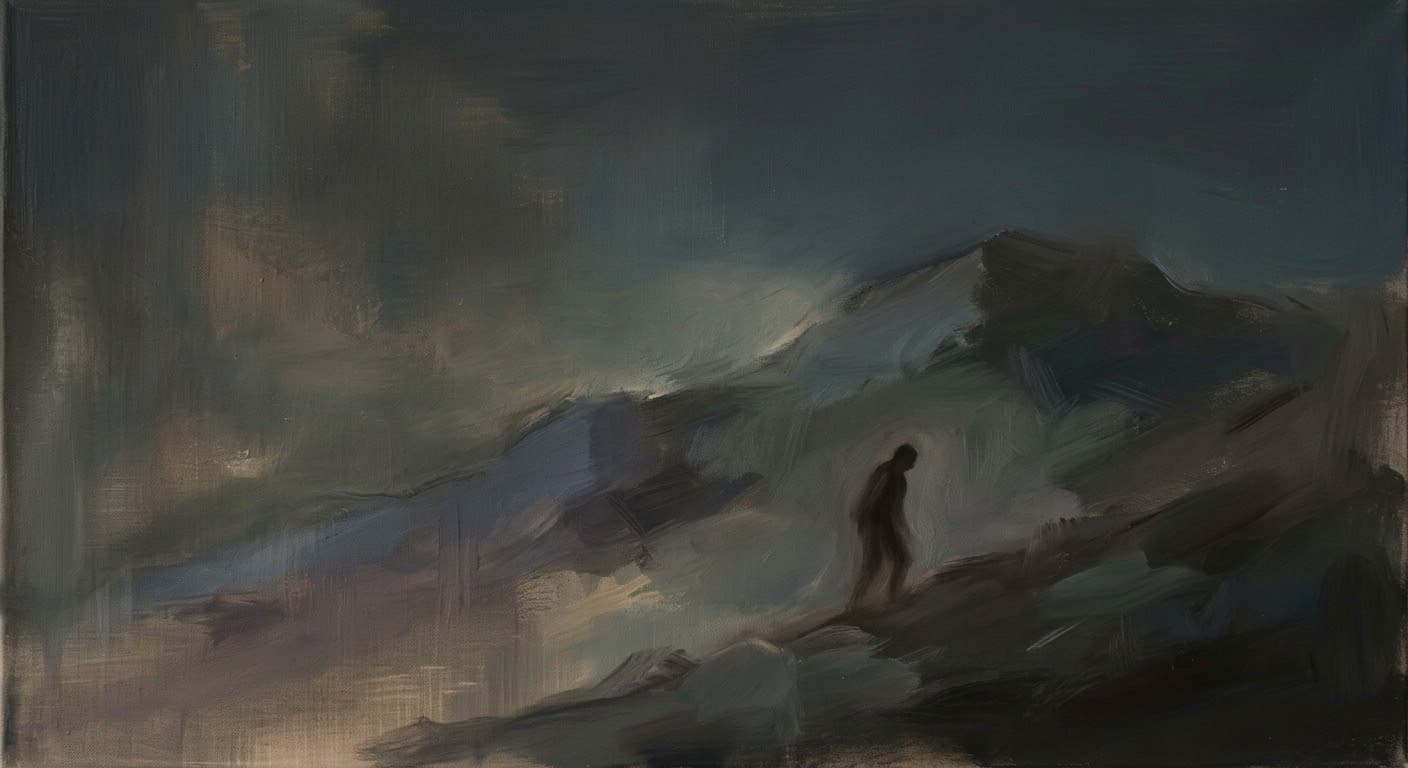
So they climb. Up into the mountains, away from all of it, and there they humbly get on their knees, because they know now that they were never perfect and never will be. They cut the noise to find the signal. They refuse the voices that would flatter them and the ones that would condemn them, the ones outside and the louder ones within. It still gets to them sometimes, in the small hours. But they are full of love, and so they do not hate what happened, and they do not hate themselves for it.
And then they take inventory. They gather the fragments—the good, the bad, the good that turned bad, the bad that taught them something good—and they lay them out, one by one, on the blank canvas that once captured the feeling of being lost. They read the past in order to arrange the present. And the present, once arranged, becomes the first honest promise they can make to their future.